Gear Ratios
The flight controller measures the motor's RPM and works out the main and tail rotor speeds from the gear ratios. Accurate ratios matter: the governor's headspeed and every RPM filter notch depend on them.
Most helicopters have a single-stage gearbox -- a motor pinion driving the main gear -- and the ratios are simply tooth counts:
| Motors tab field | Enter |
|---|---|
| Main Rotor Gear Ratio | pinion teeth : main gear teeth, e.g. 12 : 120 |
| Tail Rotor Gear Ratio | tail gear (or tail pulley) teeth : the gear (or pulley) driving it, e.g. 22 : 99 |
Some larger helicopters have a two-stage gearbox, with a countershaft between motor and main shaft. Then the ratio is the product of both stages.
Two-stage gearboxes
Type 1 -- tail driven from the countershaft
Used by many SAB and Align helicopters.
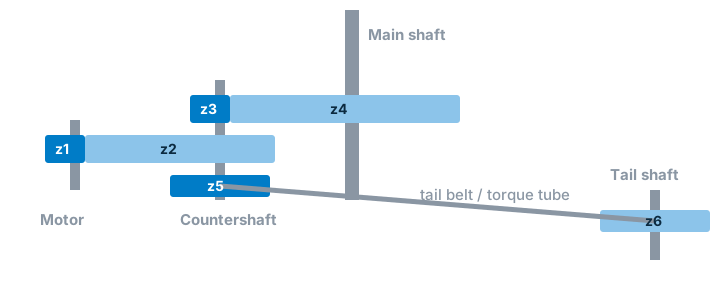
- Main Rotor Gear Ratio = (z1 × z3) : (z2 × z4)
- Tail Rotor Gear Ratio = (z3 × z6) : (z4 × z5)
The defaults are an SAB Goblin 700 with a 21T motor pinion: main
378 : 3808, tail 468 : 2312.
Type 2 -- tail driven from the main shaft
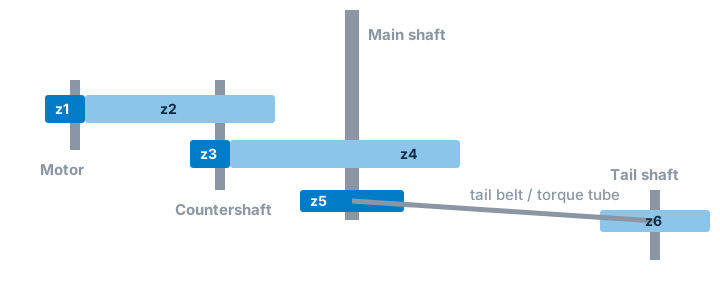
- Main Rotor Gear Ratio = (z1 × z3) : (z2 × z4)
- Tail Rotor Gear Ratio = z6 : z5
The defaults are a KDS Agile A5 with a 21T pinion: main 357 : 3564, tail
14 : 57.
Any other gearbox: count the turns
For anything else, or to check your numbers:
- Tail ratio -- mark a main blade grip and a tail blade grip, turn the
main rotor exactly 10 turns by hand, and count the tail rotor turns. Enter
10 : <tail turns>. - Main ratio -- the same with the motor and main rotor, if you can see the motor turn. Or work it out stage by stage: multiply all the driving gears' teeth together for the first number, and all the driven gears' teeth together for the second.
Then compare the Rotor Speed shown on the Motors tab with an optical tachometer.